HOW TO GET STARTED IN NRL22
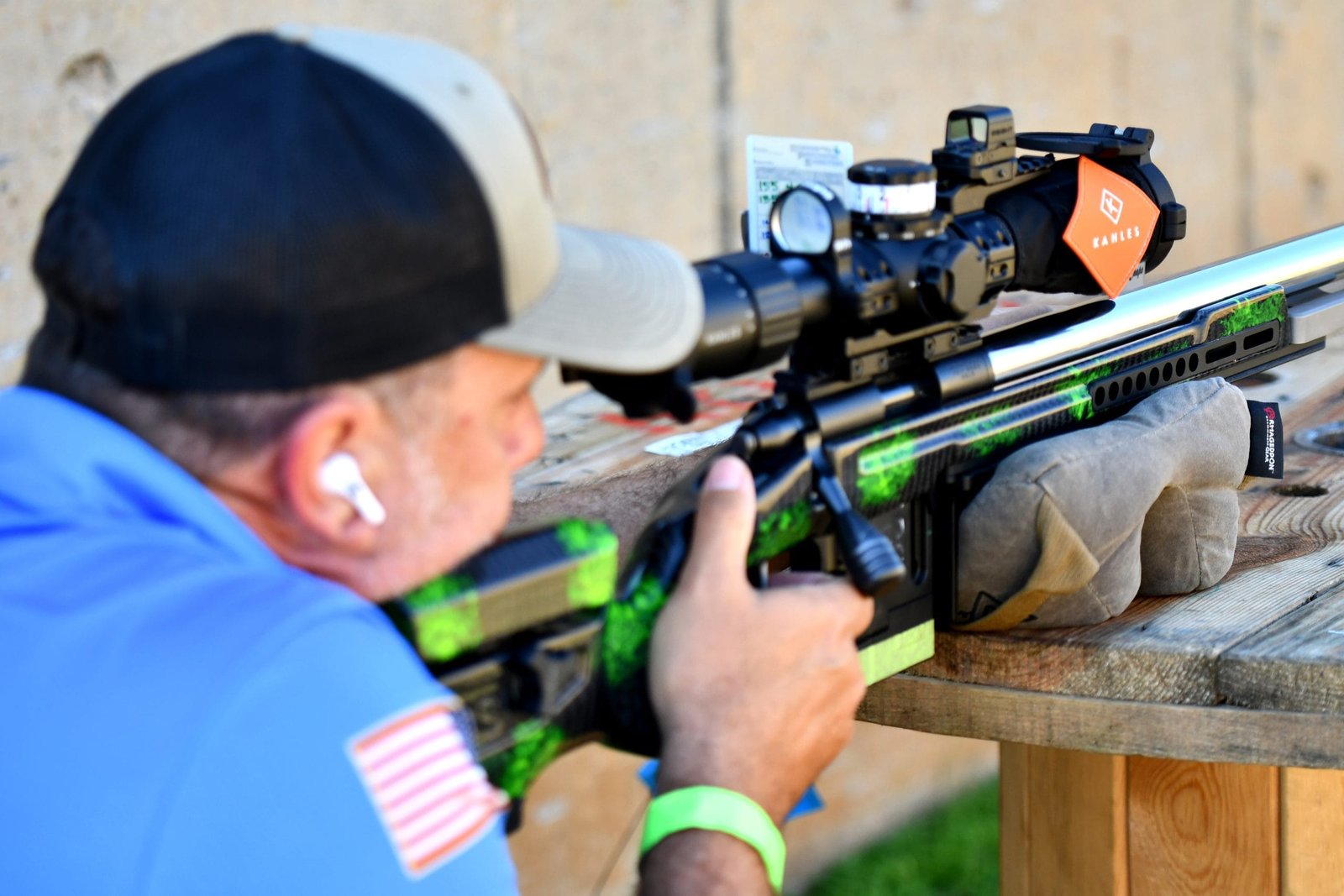
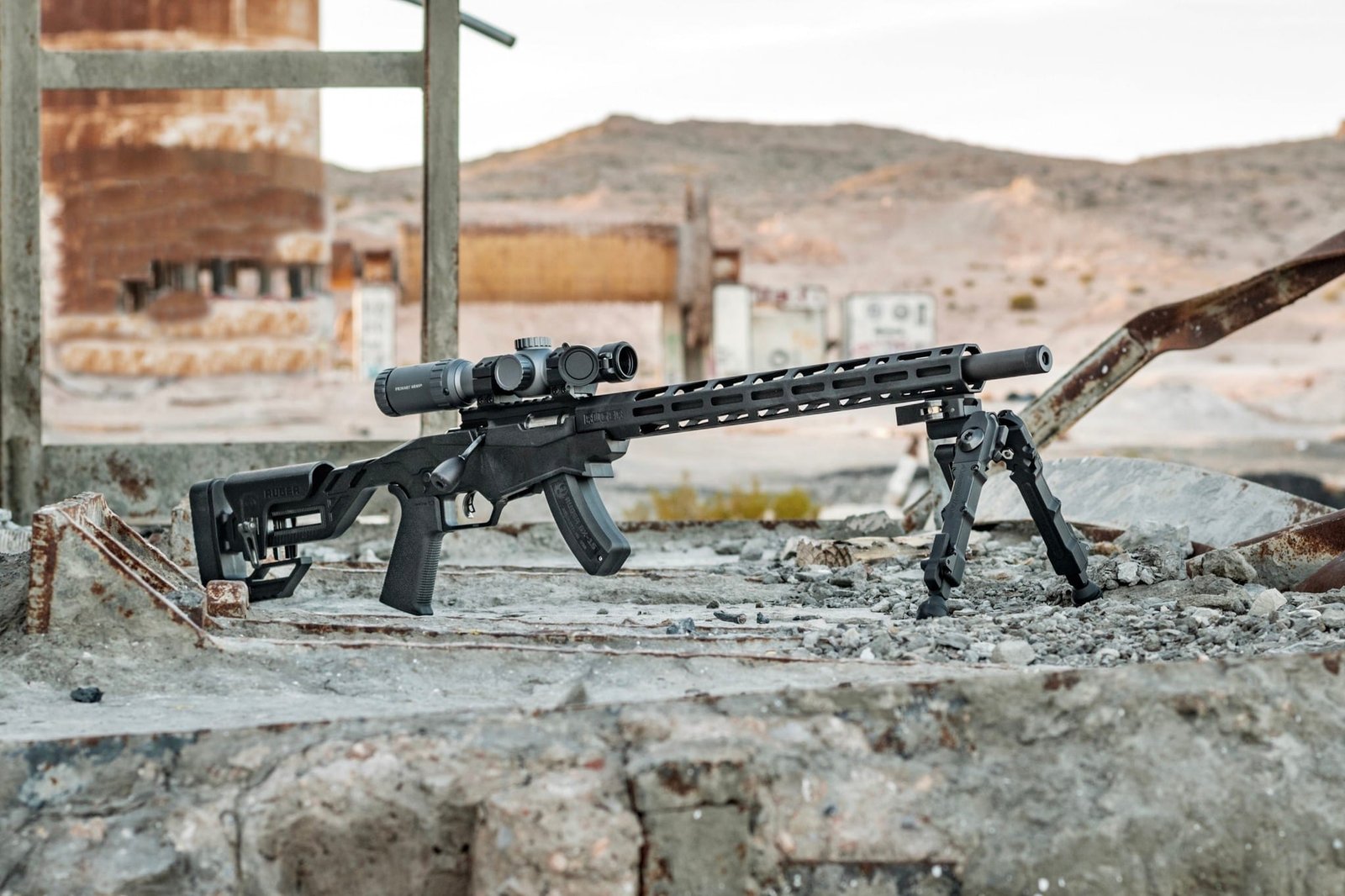
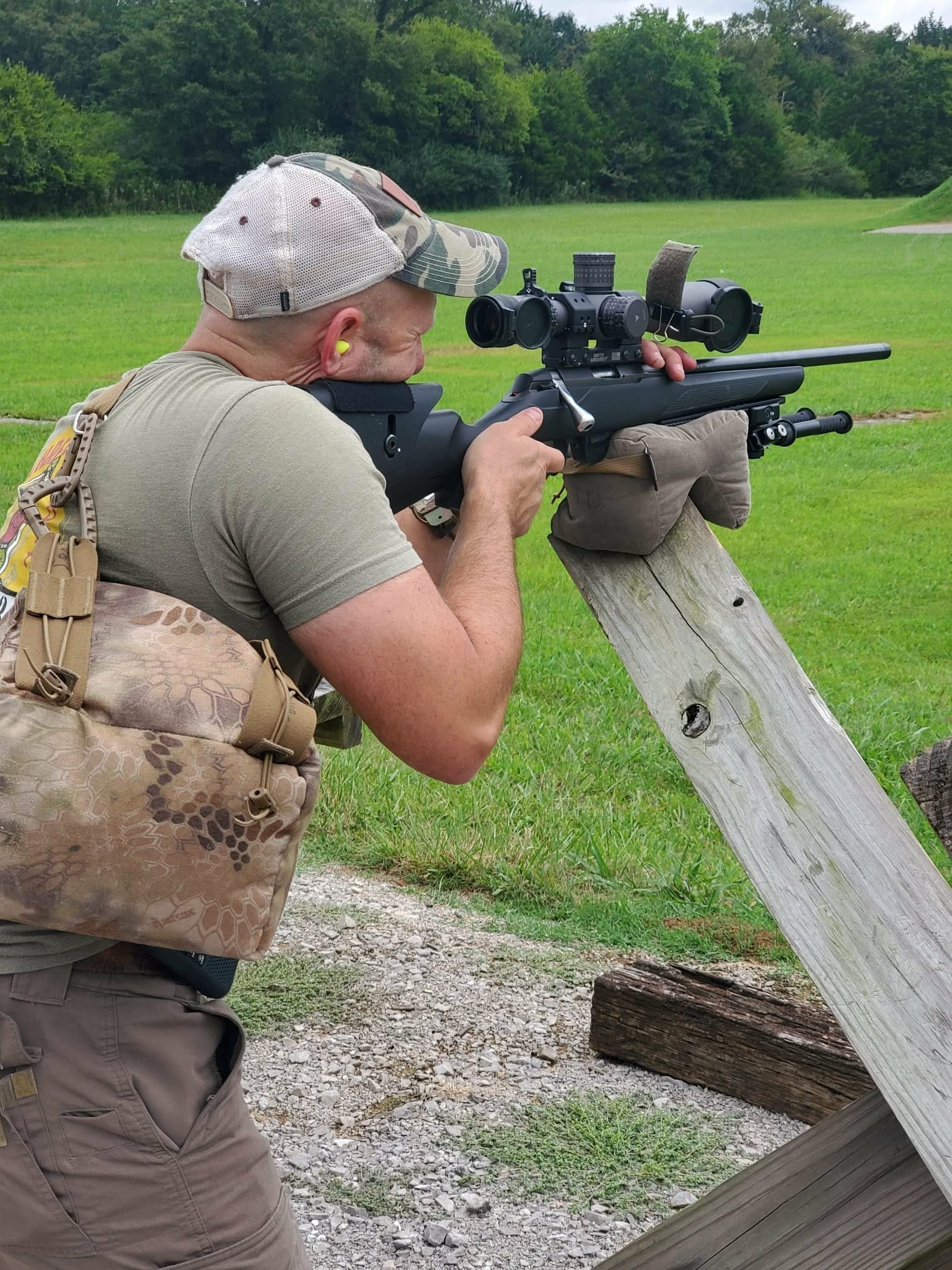
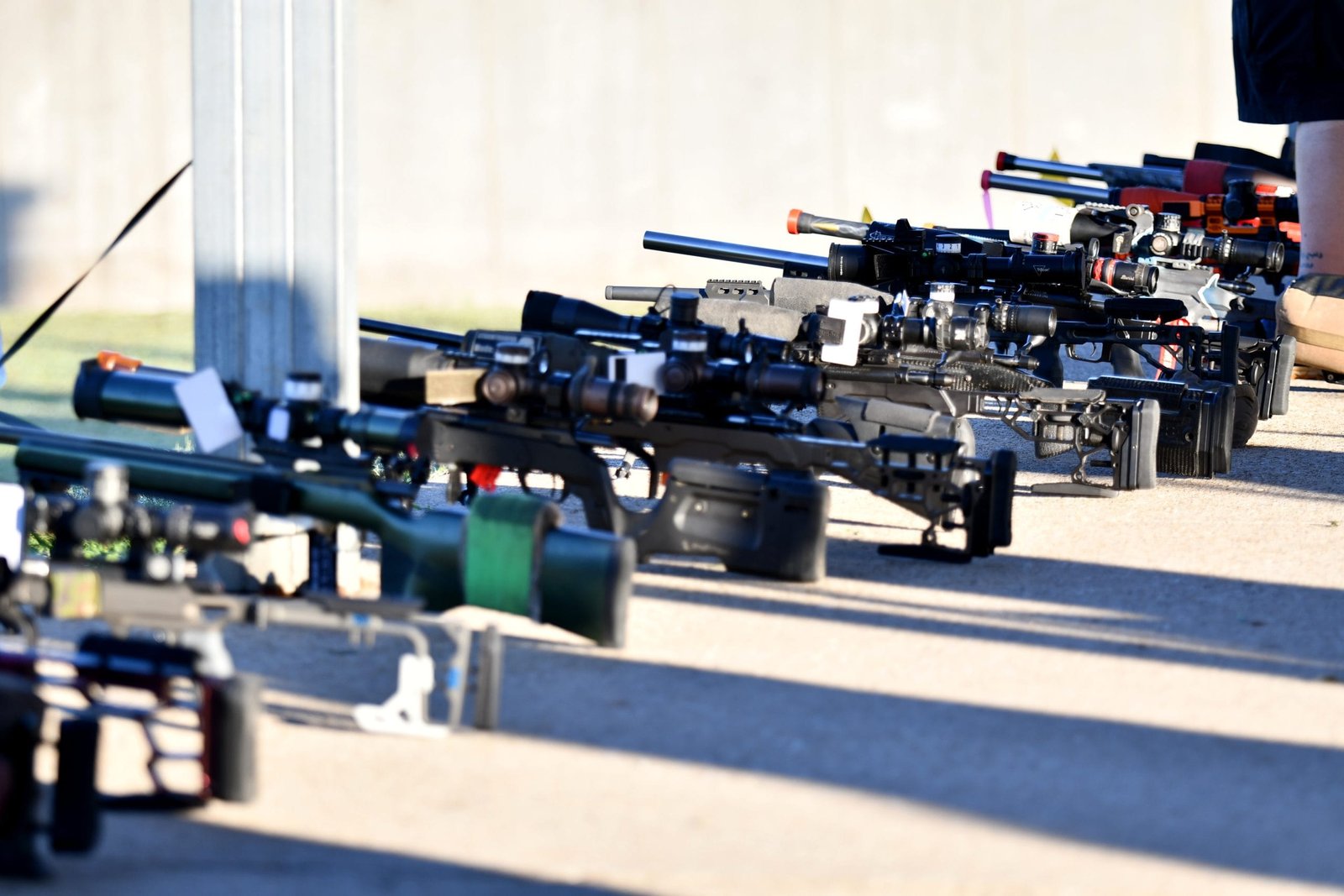
To compete in NRL22, shooters must use a .22 Long Rifle (.22 LR) rimfire rifle or Air Rifle. The sport is designed specifically around the .22 LR cartridge, allowing competitors to train and compete in precision rifle disciplines at reduced cost and recoil compared to centerfire platforms.
Action Type
NRL22 is flexible when it comes to rifle configuration. Competitors may use:
Bolt-action rifles (most common)
Semi-automatic rifles
Air Rifles
Magazine Capacity
A detachable magazine capable of holding at least 10 rounds is recommended, as most stages require 10 rounds per course of fire. Tubular magazines are not allowed.
Rifle Characteristics That Help in Competition
While many rifles can compete, the following features are beneficial:
Adjustable stock or chassis for proper fit
Heavy or bull barrel for improved consistency
Threaded muzzle (optional for suppressor use where legal)
Adjustable trigger
Ability to mount a bipod via an arca rail or picatinny rail
Recommended Rifles
There are A LOT of options out there from factory to full on custom builds.
Factory Rifles:
- Tikka T1X (great for Base division)
Tikka T1X Ace
- CZ457 (At-One, Varmint MTR, Pro Varmint SR, Varmint Precision Chassis MTR)
- Bergara (B14-R & BMR)
- KIDD Supergrade 10/22
- Volquartsen 10/22
- FX Air Rifles
Custom:
- Elemental Industries (Snapdragon)
- Vudoo Gun Works (V22, Three60)
- Zermatt Arms (RimX)
Scope Recommendations for NRL22 Competition
Choosing the right scope for NRL22 is critical. Targets are small, distances vary from 25 to 200+ yards, and stages often require rapid elevation changes and precise wind holds. A purpose-built precision rifle scope will make a significant difference in performance.
Below are the key characteristics that define an ideal NRL22 optic:
First Focal Plane (FFP)
A First Focal Plane (FFP) scope is strongly recommended.
In an FFP scope, the reticle scales with magnification. This means:
Your holdovers and wind holds remain accurate at any magnification.
You can zoom in or out during a stage without recalculating holds.
Because NRL22 stages often require shooters to transition between targets quickly and sometimes change magnification for field of view, FFP offers maximum flexibility and consistency.
MIL Reticle and MIL Turrets (Matching System)
A MIL/MIL system (milliradian reticle and milliradian turrets) is the preferred setup for most competitors.
Benefits include:
Simpler math and corrections
Easier communication with spotters (“Impact was 0.3 mil low”)
Faster adjustments between targets
While MOA scopes are allowed and can be competitive, MIL has become the dominant standard in rimfire precision competition.
External (Exposed) Elevation Turrets
NRL22 stages require frequent elevation adjustments. A scope should have:
Exposed, repeatable external turrets
Positive, tactile clicks
Reliable tracking (returns to zero consistently)
Many stages require dialing multiple distances within a single course of fire. Capped hunting-style turrets are not ideal for this type of competition.
A zero stop feature is also highly recommended to quickly return to your baseline zero under time pressure.
“Christmas Tree” Style Reticle
A Christmas tree reticle provides multiple horizontal wind hold references below the main crosshair.
Advantages:
Allows simultaneous elevation and wind holds without dialing
Faster target transitions
Ideal for stages where dialing every distance isn’t practical
In NRL22, where wind can dramatically affect a .22 LR bullet, having multiple wind reference marks is extremely valuable.
Magnification Range
A good magnification range for NRL22 is typically:
3–18x
5–25x
5-40x
6-36x
You don’t always shoot at max magnification. Many experienced competitors back down to 10–15x for better field of view and reduced wobble during positional stages; However, must competitors will have a scope that has a magnification of 25x or greate.
Parallax Adjustment
Parallax adjustment down to at least 25 yards is essential. NRL22 regularly includes targets inside 50 yards, and a scope must be capable of focusing clearly at those distances.
Scope Base & Rail Cant (0, 20, and 30 MOA)
An often-overlooked but extremely important component is the scope base (rail) and its built-in cant.
0 MOA Rail
A 0 MOA rail is flat and provides no built-in elevation.
Suitable for shorter distance shooting
May limit available elevation adjustment for longer NRL22 targets
20 MOA Rail
A 20 MOA rail tilts the scope slightly downward toward the muzzle, giving you additional usable elevation in your turret.
Benefits:
Preserves internal elevation for longer shots
Allows dialing farther distances without maxing out the scope
Keeps your erector system closer to optical center for better clarity and tracking
For most NRL22 competitors, 20 MOA is the ideal all-around choice.
30 MOA Rail
A 30 MOA rail provides even more built-in cant.
This can be beneficial if:
You frequently shoot extended distances (NRL22X style ranges)
Your scope has limited internal elevation travel
You want maximum dialing capability
However, too much cant can limit adjustment at very close distances if your scope does not have enough downward travel.
Why Rail Cant Matters in NRL22
A .22 LR bullet drops significantly at distance. It is common to dial several mils of elevation even at 100–200 yards. Using a 20 or 30 MOA rail:
Prevents running out of turret travel
Improves tracking consistency
Keeps the optic operating in a more optimal mechanical range
For competitive NRL22 setups, a 20 MOA base paired with a quality FFP MIL scope is one of the most common and effective configurations.
Reliable Tracking & Durability
Most importantly, the scope must:
Track accurately
Return to zero consistently
Maintain zero under match conditions
Consistency matters more than brand name.
Summary of Ideal NRL22 Scope Features
First Focal Plane (FFP)
MIL reticle with matching MIL turrets
Exposed elevation turret with zero stop
Christmas tree style reticle
Side parallax adjustment (25 yards or closer)
Reliable tracking and repeatability
Mid- to high-range magnification (3–18x, 5–25x, etc.)
Recommended Scopes
ZEISS (LRP S3 & S5)
- Athlon (Cronus, Ares, Midas, Helos & Argos)
- Arken (EP5 & SH-4)
- Burris (XTR)
- Vortex (Razor Gen II & III, Strike Eagle & Venom)
- Kahles (K525i & K540i)
- Nightforce (ATACR, NX-6 & NX-8)
Ammunition Selection for NRL22
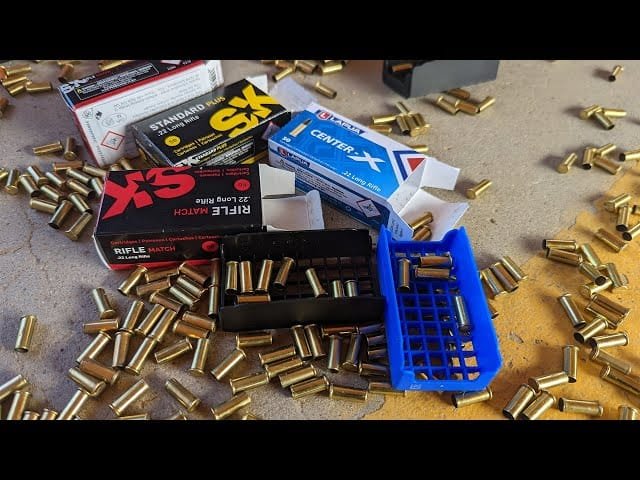
In NRL22, ammunition choice can have a major impact on performance. Because you are shooting small targets at varying distances—often out to 200 yards or more—consistency is critical. Even the best rifle and optic combination cannot overcome inconsistent ammo.
Use Quality .22 LR Match Ammunition
NRL22 is built around .22 Long Rifle (.22 LR), and most competitive shooters use standard velocity match ammunition.
Why standard velocity?
Typically subsonic (avoids transonic instability)
More consistent flight characteristics
Better extreme spread (ES) and standard deviation (SD) compared to bulk ammo
High-velocity or bulk-pack ammunition may function fine for practice, but it generally lacks the consistency required for competitive precision shooting.
Consistency Matters More Than Speed
In rimfire competition, consistency is king. What you’re looking for:
Low velocity variation (low SD and ES)
Uniform bullet weight and lubrication
Reliable ignition
At longer distances, even small velocity differences can cause noticeable vertical stringing. A difference of 20–30 fps can mean the difference between a hit and a miss on small targets.
Lot Testing: Why It’s Critical
One of the most important (and often overlooked) aspects of rimfire competition is lot testing.
What Is Lot Testing?
Even within the same brand and product line, each manufacturing lot of ammunition can perform differently. Rimfire ammo is not handloaded by the shooter, so you are dependent on factory consistency.
Two boxes with the same label—but from different lot numbers—can produce very different results in your rifle.
Why Each Lot Can Vary
Lot-to-lot variation can occur due to:
Powder charge differences
Priming compound variation
Bullet diameter or lubrication changes
Environmental conditions during production
Because .22 LR is rimfire and uses priming compound spun into the rim, it is inherently more variable than centerfire ammunition. Small differences in production can show up on target.
How to Lot Test
Lot testing typically involves:
Shooting multiple lots of the same ammunition brand through your rifle
Firing groups at 50 yards (and sometimes 100 yards)
Evaluating group size and consistency
Checking velocity with a chronograph
You may find that:
Lot A shoots ½-inch groups
Lot B shoots 1-inch groups
Lot C shoots tight but has higher velocity variation
Every rifle is unique. What shoots exceptionally well in one rifle may not perform the same in another.
Buy in Quantity Once You Find a Good Lot
Once you find a lot that your rifle shoots well:
Purchase as much of that lot as feasible
Confirm the lot number before buying
Keep match ammo separate from practice ammo
Switching lots mid-season can change your point of impact and ballistic data.
Lot Testing & Professional Ammo Evaluation
In NRL22, even within the same brand and product line, each manufacturing lot of ammo can perform differently in your rifle. Because .22 LR rimfire ammo has inherent variability in priming, powder charge, and bullet dimensions, it’s common for one lot to group tighter than another—even if they’re the same product. That’s why many serious competitors perform lot testing rather than buying ammo blindly. Good lot testing helps you identify which specific production lot your rifle likes, and lets you stock up on that lot so you aren’t surprised by changes on match day.
Lapua Rimfire Performance Centers (Arizona & Ohio)
One of the most advanced ways to lot test .22 LR ammo professionally is through the Lapua Rimfire Performance Centers in the United States. These facilities—modeled after Lapua’s world-renowned European test centers—allow shooters to test multiple lots of ammunition with their rifle in a controlled, scientific setting. They have two locations: one in Mesa, Arizona and another at the Cardinal Shooting Center in Marengo, Ohio.
Practice Ammo vs Match Ammo
Many shooters use:
Higher-end match ammo for competitions
Slightly less expensive (but still consistent) ammo for practice
The key is to confirm that your match ammo and practice ammo have similar ballistic characteristics—or re-verify your data before a match.
Summary: What to Look for in NRL22 Ammo
.22 LR standard velocity match ammunition
Low SD and ES
Consistent grouping in your specific rifle
Lot-tested performance
Ability to purchase and stock up on the same lot
In NRL22, precision shooting comes down to consistency. The right ammunition—tested and verified in your rifle—removes one of the biggest variables in the equation and allows you to focus on wind calls, positional stability, and stage management.
Recommended Ammunition
Lapua (Center-X, Midas +, XAct, Long Range & Super Long Range)
- SK (Standard Plus, Rifle Match, Long Range Match
- Eley (Target, Team, Match, Ultra Extreme Long Range G2 & Tenex

Why a Ballistics Solver Is Important in NRL22
In NRL22, stages can present multiple targets at varying with wind and terrain playing critical roles. Because the .22 LR cartridge has a pronounced trajectory compared to centerfire rounds, understanding exactly how your ammunition will behave as it travels downrange is essential. A ballistics solver—whether a handheld device or a smartphone app—helps you quantify that behavior and make accurate corrections on the fly.
What a Ballistics Solver Does
A ballistics solver calculates the expected point of impact for your specific rifle, ammunition, and environmental conditions. It uses inputs like:
Muzzle velocity
Ballistic coefficient of your bullet
Distance to target
Wind speed and direction
Altitude, temperature, humidity
Atmospheric pressure and density
With that data, a solver outputs precise values for:
Elevation (drop) holds or turret clicks
Wind holds (for hold-offs or reticle marks)
Trajectory in inches, MOA, or mils
By giving you these values, a ballistics solver allows you to make informed decisions quickly—whether you’re dialing your turret, holding off in your reticle, or adjusting for wind.
How Solvers Are Used in NRL22
In competition, you typically use a solver in two main ways:
1. Pre-Stage Planning
Before a stage begins, you:
Verify distances to known targets (or estimate if unknown)
Input environmental conditions
Generate a ballistic table or reference card
Decide on holds/dials for each target
This preparation lets you move fluidly through the course of fire without guessing.
2. Live Adjustments
During a stage, conditions can change:
Wind direction and speed fluctuate
Temperature and sunlight alter mirage
You may encounter unexpected props or angles
Updating your solver with real-time data improves accuracy for second and third shots, especially when wind significantly affects .22 LR performance.
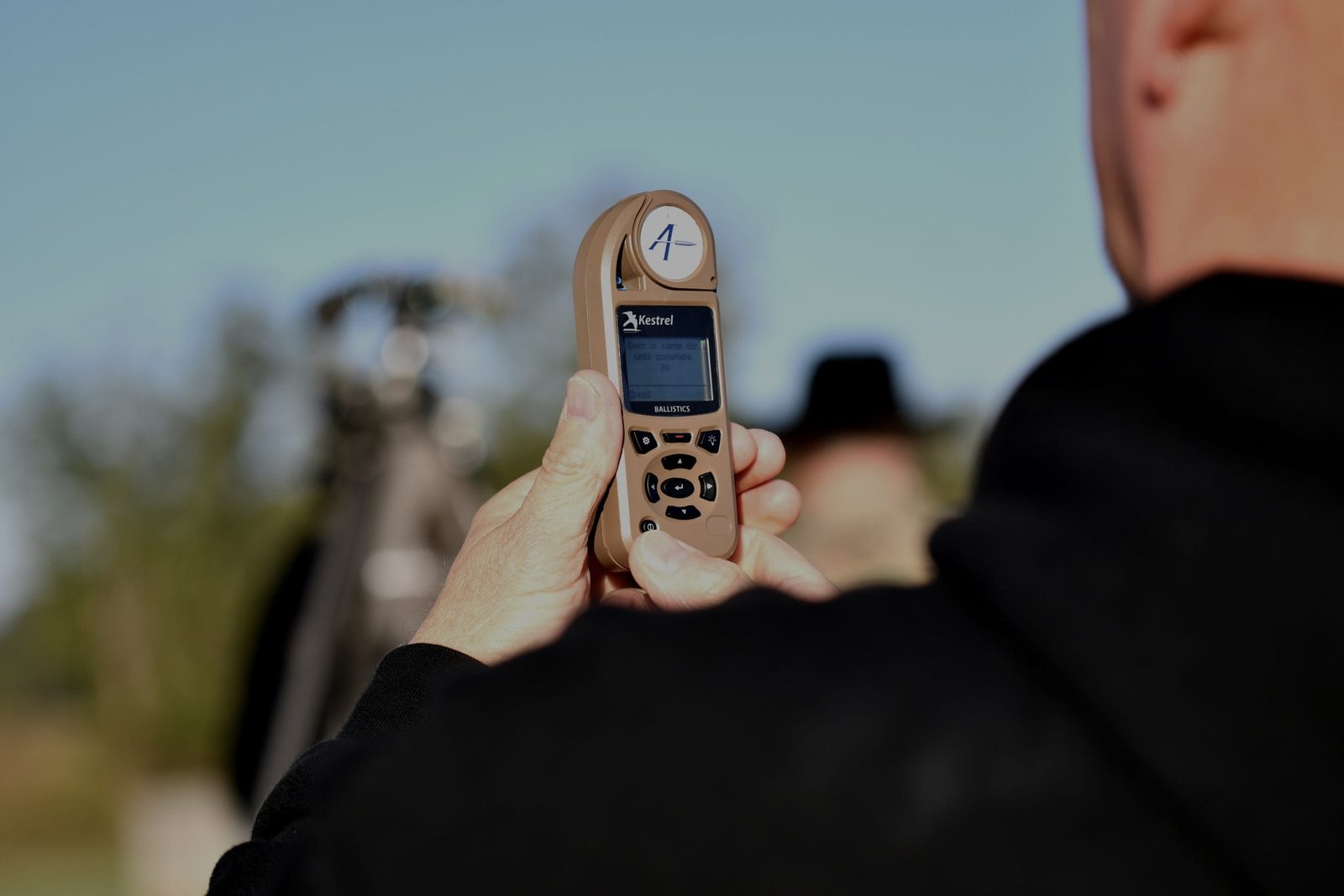
The Kestrel 5700: A Gold Standard
The Kestrel 5700 series with a ballistics solver module is widely regarded as one of the most capable dedicated handheld solutions for precision shooters.
Key advantages:
Integrated anemometer for real atmospheric wind measurement
Built-in sensors for temperature, humidity, and pressure
Ability to store multiple gun/ammo profiles
Outputs holdover and windage corrections in mils/MOA
Rugged, reliable, and designed for field use
A Kestrel eliminates guesswork—because it measures actual conditions rather than relying on estimates—and calculates real-world solutions instantly. For NRL22, where wind and weather often matter more than in centerfire disciplines, this real-time data is invaluable.
Recommended Ballistics Solver Tools
Here are some solid options, both free and paid, to fit different budgets and workflows:
Free Options
1. JBM Ballistics Calculator
Web-based solver with detailed outputs
Good for generating ballistic tables before match day
Not as convenient for real-time use
2. Strelok Free
Mobile app version of a popular solver family
Supports multiple units and output types
Basic but solid for entry-level use
3. Applied Ballistics (Basic)
Free solver with essential capabilities
Less robust than paid versions but still useful
Free solvers are great for planning and education—but they rely entirely on user-input conditions, so real-world wind and atmospheric effects are not measured.
Paid Options
1. Applied Ballistics Mobile (iOS/Android)
One of the most respected solvers in the precision shooting community
Includes a comprehensive database of bullets
Allows storage of multiple rifles/ammo sets
Offers detailed graphs, tables, and reticle reference points
2. Strelok Pro
Paid version with more features than the free app
Custom ballistic coefficients and advanced environmental modeling
Suitable for both rimfire and centerfire
3. Kestrel Ballistics Weather Meters (e.g., 5700 Elite)
Combines measurement hardware and solver in one
Best real-time wind and environmental data integration
Premium experience for serious competitors
4. Hornady Ballistic Calculator (App)
Simple and intuitive
Less robust than Applied Ballistics but still useful for quick planning
Summary
A ballistics solver turns range data and environmental conditions into actionable aiming solutions. In NRL22:
Trajectory matters — .22 LR drops quickly, especially past 100 yards
Wind matters — occasional light breezes can cause large lateral shifts
Accuracy matters — hits and misses are often decided by fractions of mils
Using a solver—especially one tied to real-world measurements like the Kestrel 5700—gives you that edge. Pairing a solver with good lot-tested ammunition and solid range data elevates your match performance from guesswork to confidence.

Support Bags for NRL22 Competition
In NRL22, support bags are one of the most important pieces of gear you’ll use. Because stages are heavily positional—barricades, tank traps, tires, rooftops, ladders, and other improvised props—a quality support bag can dramatically improve stability, recoil control, and overall stage efficiency.
Choosing the right bag isn’t just about brand—it’s about size, fill type, and weight.
We strongly recommend attending a match before purchasing support bags. Watching what experienced shooters are using—and asking to try their bags during practice during or after a stage—can give you valuable hands-on insight into what works best for your shooting style.
Experiment with a variety of bag sizes, shapes, and fill types whenever possible. What feels stable and efficient for one shooter may not work the same for another. Taking the time to test different options will help you make an informed decision and avoid investing in gear that ultimately doesn’t fit your needs.
Heavy Fill vs. Light Fill
The fill material inside your bag significantly affects how it performs on props.
Heavy Fill Bags
Heavy bags are typically filled with materials like:
Sand
Heavy glass media
Dense polymer fill
Advantages:
Extremely stable on barricades
Conforms well to props
Excellent for “dead weight” support
Reduces rifle movement and bounce
Heavy bags shine on flat or semi-flat surfaces where maximum stability is the priority. Many shooters prefer a heavier bag for rooftop stages or wide barricades where the bag can settle and lock in.
Tradeoff:
They add weight to your overall match setup and can be slower to reposition quickly.
Light Fill Bags
Light bags are often filled with:
Lightweight polymer beads
Spex•Lite (ultra-light synthetic fill)
Air-soft style fill
Advantages:
Much lighter to carry through the match
Easier to manipulate quickly
Faster transitions between positions
Great for stages requiring movement
Light fill bags are ideal when speed matters and when you’re building support dynamically rather than relying on pure mass.
Tradeoff:
They may not “lock in” as solidly on some props compared to heavy-fill options.
Non-Absorbent Fill (Glass Media & Spex•Lite)
Moisture is a real consideration in NRL22. Morning dew, rain, snow, and mud can quickly ruin traditional sand-filled bags.
That’s why many competitors prefer non-absorbent fill materials, such as:
Glass Media
Consistent density
Does not absorb water
Maintains weight even in wet conditions
Durable and long-lasting
Spex•Lite (Lightweight Synthetic Fill)
Extremely lightweight
Does not absorb moisture
Very consistent shape and density
Ideal for reducing overall match weight
Non-absorbent fills maintain consistent performance regardless of weather conditions. This is especially important for competitors shooting monthly matches year-round.
Choosing the Right Bag Setup
Most competitive NRL22 shooters run:
One primary barricade-style bag (medium to large)
Often with a heavy or medium-heavy fill
Sometimes paired with a lightweight secondary bag for specialty positions
The best bag for you depends on:
Your stage strategy (dial vs. hold heavy)
Your tolerance for match weight
The types of props commonly used at your club
Personal preference in stability vs. speed
Key Characteristics to Look For
Durable outer material (Waxed Canvas or Cordura).
Waxed canvas material conforms much better to barricades and is more malleable than Cordura fabric.
Grippy surface for barricades
Structured design that holds shape
Fill that matches your balance of stability and weight
Non-absorbent material for all-weather performance
Final Thoughts
In NRL22, support bags are not optional—they are a core piece of equipment. The right combination of bag design and fill material can reduce wobble, improve hit percentage, and save valuable seconds on stage.
Whether you prefer the rock-solid stability of heavy glass media or the maneuverability of Spex•Lite-filled bags, the key is choosing a setup that supports your shooting style and remains consistent in all conditions.
Recommended Support Bags
- Armageddon Gear Game Changer (Shmedium & Plus One)
WieBad (Tator Tot & Mini-Fortune Cookie)
- The Freedom Shack (Sandcastle & The Fatty)

The Importance of a Quality Bipod in NRL22
In NRL22, a bipod is one of the foundational pieces of equipment on your rifle. While many stages are heavily positional and rely on support bags, there are still numerous scenarios—prone stages, modified prone, 55-gal barrels —where a bipod provides the primary front support for your rifle.
A solid bipod is not just an accessory. It directly impacts stability, recoil management, and your ability to spot impacts.
Why a Bipod Matters
Stability
NRL22 targets are small, and the .22 LR cartridge is highly sensitive to wind and minor aiming errors. A rigid, stable bipod minimizes vertical and horizontal movement, helping you break cleaner shots.
Recoil Management & Impact Spotting
Although .22 LR has minimal recoil, a poorly built bipod can “bounce” or shift under recoil. A stable bipod allows you to:
Maintain sight picture through the shot
Spot impacts or misses
Make quick follow-up corrections
Being able to self-spot is a major advantage in competition.
Consistency
A quality bipod returns to the same position shot after shot. Cheap or flexible bipods may shift under load, creating inconsistent point of impact.
Key Characteristics of a Good NRL22 Bipod
Adjustable Leg Height
Allows adaptation to uneven terrain
Essential for rooftop or angled props
Quick-adjust legs save time under pressure
Cant Adjustment
Lets you level your rifle on uneven ground
Critical for maintaining true vertical alignment
Helps avoid cant-induced misses at distance
Pan Feature (Optional)
Some shooters prefer a panning feature for target transitions. Others prefer a locked-out pan for maximum stability. Personal preference plays a role here.
Wide Stance
A wider footprint increases lateral stability and reduces wobble, especially in prone or semi-supported positions.
Solid Lockup
Minimal flex under forward load
Strong leg retention system
Durable mounting interface (Picatinny or ARCA preferred)
A bipod should allow you to “load” into it—applying forward pressure to create a stable shooting platform without slipping or collapsing.
Mounting Considerations
Many competitive shooters use:
ARCA rail-mounted bipods for fast position changes (most widely used)
Picatinny-mounted bipods for more traditional setups
ARCA systems provide greater adjustability and allow quick repositioning along the forend, which can be beneficial in certain stages.
Why a Solid Bipod Is Worth the Investment
In NRL22, misses are often measured in tenths of a mil. Equipment inconsistency adds unnecessary variables. A rigid, well-built bipod:
Reduces movement
Improves positional confidence
Enhances follow-through
Increases hit probability
While bags dominate many barricade stages, a dependable bipod is still a core component of a competitive rifle setup. Cutting corners here can cost points over the course of a match.
Final Thoughts
A bipod in NRL22 is more than a support device—it’s part of your rifle’s foundation. Choose one that is durable, adjustable, and capable of handling forward pressure without flex. When paired with proper bag support and solid fundamentals, a quality bipod helps create a stable shooting system that performs consistently under match conditions.
Recommended Bipods
- Accu-Tac (BR-4 & FD-4)
- Warne (Skyline & 4902M)
- Thunder Beast Arms Corp
- Harris (SBRM 6-9)
- MDT (Grnd Pod, Ckye-Pod)
![]()
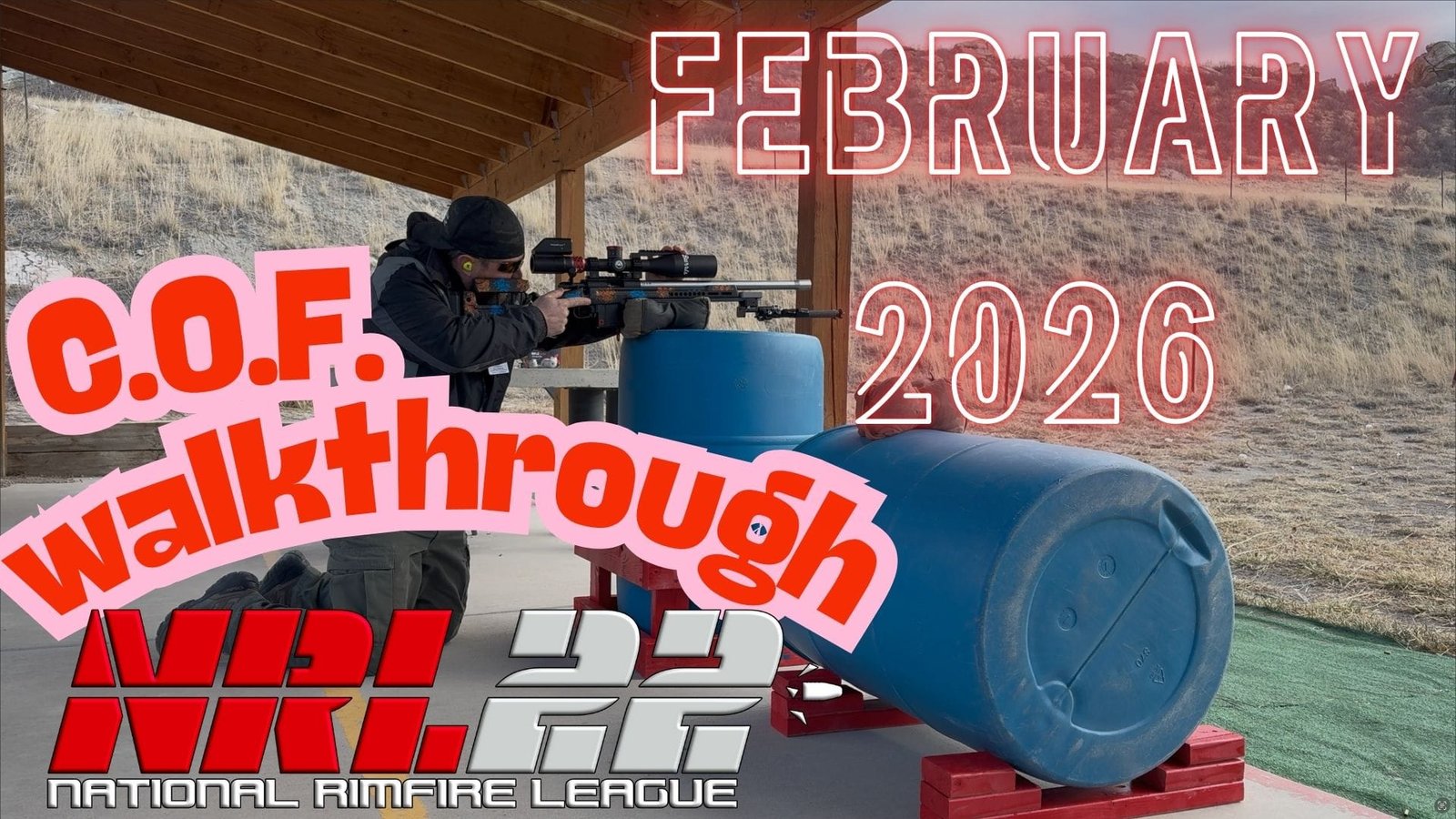
The Value of the Official NRL22 COF Walkthrough Video
One of the most useful resources for new and experienced NRL22 competitors alike is the Official NRL22 Course of Fire (COF) Walkthrough Video provided by the National Rifle League. This video is not just a rulebook supplement—it’s a practical demonstration of how courses are laid out, how stages flow, and how top competitors think through shooting positions and transitions.
Make sure to watch all the latest COF walkthrough videos on our YouTube Channel. Don’t forget to Like the videos, Follow our channel and socials, and Subscribe to our channel. Click here to go to our YouTube Channel.
Here’s why watching and studying the official COF walkthrough is highly beneficial:
Understand Stage Flow Before You Step Foot on the Line
The walkthrough video visually walks you through:
Target placement and distances
Prop variety (barricades, tires, ladders, rooftops, etc.)
Direction of fire and positional requirements
Boundaries and no-shoot zones
This helps you internalize what a typical NRL22 stage looks like so you’re not seeing it for the first time under match pressure.
Learn How to Read a COF Diagram
COF diagrams on paper can be hard to interpret if you haven’t seen one in action. The video bridges that gap by showing how the diagram:
Translates into real props on the range
Defines shooter movement and engagement order
Illustrates where you’re allowed to rest your rifle
Highlights tricky or unconventional stages
This visual learning accelerates your ability to “read” a stage quickly and effectively.
Improve Strategy and Positional Thinking
Watching the walkthrough allows you to:
Plan where to use supports or bags
Decide when to dial vs. hold
Anticipate transition points
Think through wind and hold logic
This mental rehearsal is the exact preparation many top shooters use before a match.
See What Judges Are Looking For
NRL22 has specific rules on:
Where the rifle may or may not contact props
Shooter position requirements
Time limits
Engagement order
The walkthrough shows how these rules apply during execution so you’re less likely to pick up penalties from misunderstandings.
Great for First-Time Shooters and Seasoned Competitors
Whether you’re:
Competing in your very first match
Moving up from club shoots
Trying to improve staging efficiency
Preparing for a regionals or nationals
…the COF walkthrough is a common reference point that brings clarity to how NRL22 works in practice.
How to Use the Video Effectively
Before Match Day
Watch the walkthrough to get a high-level view of the stage.
Visualize your plan: where you will set up, how you will transition, and where you will place bags.
At the Line
Refer back to the COF diagram with the walkthrough in mind.
Confirm your strategy with what you saw visually in the video.
Final Thoughts
The Official NRL22 COF Walkthrough Video isn’t just a resource—it’s pre-match ammunition for the mind. It reduces guesswork, builds confidence, and helps you execute with clarity on match day. Whether you’re a new shooter trying to understand how NRL22 stages work or a seasoned competitor looking to sharpen your approach, the walkthrough video is one of the most impactful tools you can use in your preparation.